Corgi Harnesses Built for Long Bodies, Broad Chests, and Short Legs
Corgis need harnesses that work with their body shape, not against it. Their long backs, broad chests, and short legs can make standard dog harnesses harder to fit, especially if the harness is too short through the body, too tight behind the front legs, or too loose around the chest.
A good corgi harness should distribute leash pressure across the chest and shoulders instead of the neck, sit comfortably behind the front legs, and stay centered while your dog walks. This matters for everyday comfort, but it also matters because corgis are long-bodied, short-legged dogs with a known predisposition to spinal disc issues such as IVDD.
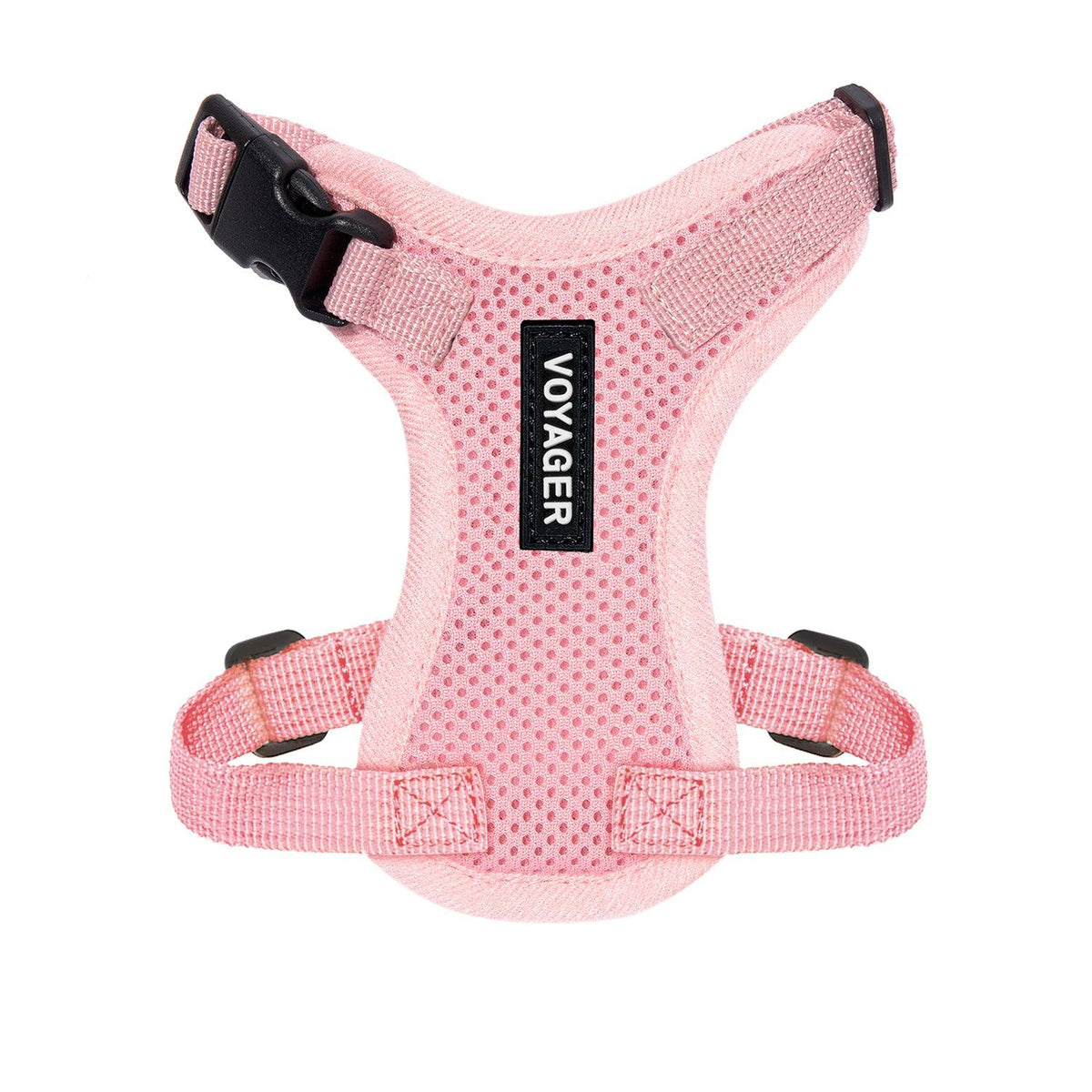
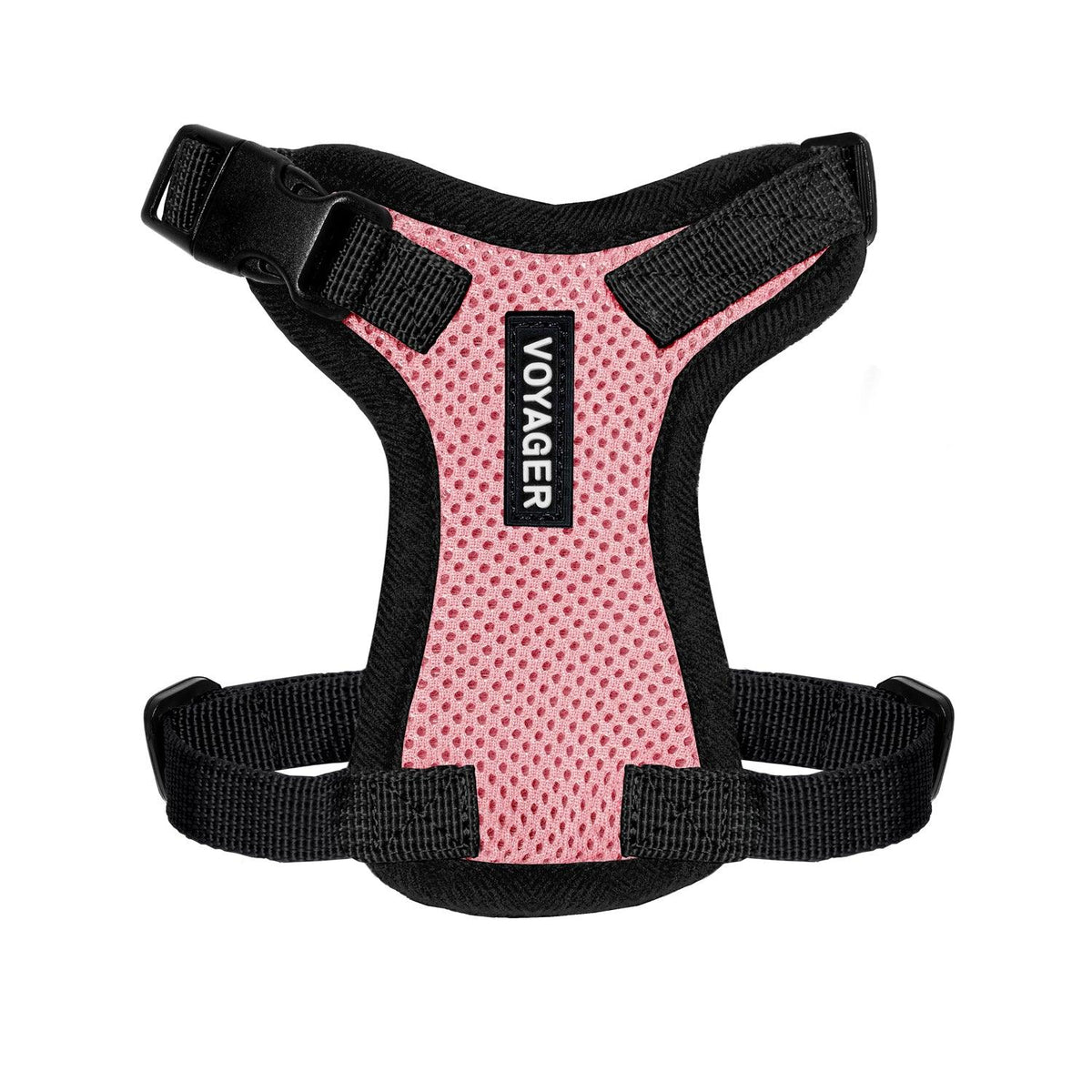
Voyager offers step-in harness options for corgis and corgi mixes, from lightweight everyday styles to adjustable and dual-attachment harnesses for dogs that need more control.
Why Corgis Need a Harness Made for Their Shape
Corgis are low-set, sturdy dogs with wide chests and short legs. That combination creates a few fit challenges.
First, their chest is often wider than their weight suggests, so choosing a harness by weight alone can be misleading. Second, their front legs sit close to the chest, which means the harness needs enough armpit clearance to avoid rubbing. Third, their longer body means the harness should not ride up, twist, or pull backward during walks.
For corgis, the best harness is one that supports comfortable movement without putting pressure on the neck or spine. A collar can still be useful for ID tags, but for leash walks, a well-fitted harness is usually the better choice.
The same fit principles also apply to other long-bodied, short-legged breeds, including dachshunds and basset hounds.
Key Features of the Best Dog Harness for Corgis
The best dog harness for corgi dogs should focus on fit, movement, and control.
-
A chest shape that does not restrict movement
The harness should allow your corgi’s front legs to move naturally. Avoid harnesses that sit too close to the armpits or press across the front of the shoulders.
-
Adjustability around the chest and neck
Corgis can be broad through the chest but smaller around the neck. Adjustable straps help create a snug fit without forcing one area too tight.
-
Armpit clearance
After putting the harness on, check that the chest strap sits at least two finger-widths behind the front legs. If the strap sits too close, it may cause rubbing or hair loss after longer walks.
-
Secure leash attachment
A back clip works well for calm everyday walks. A front clip or dual-attachment harness can help redirect dogs that pull.
-
Comfortable materials
Breathable mesh works well for warm weather and active walks. Plush-lined styles may be better for cooler weather or dogs with more sensitive skin.
IVDD Awareness and Harness Choice for Corgis
Corgis are one of the breeds associated with chondrodystrophy, a long-body, short-leg structure linked with a higher risk of Intervertebral Disc Disease, or IVDD. A harness cannot prevent IVDD, but choosing the right walking gear can help reduce unnecessary pressure during daily walks.
For corgis, a harness is generally better than attaching the leash to a collar because it moves leash pressure away from the neck and spreads it across the chest and shoulders. For dogs that pull, a front-clip or dual-attachment harness may be helpful because it redirects momentum instead of allowing the dog to lean forward into the leash.
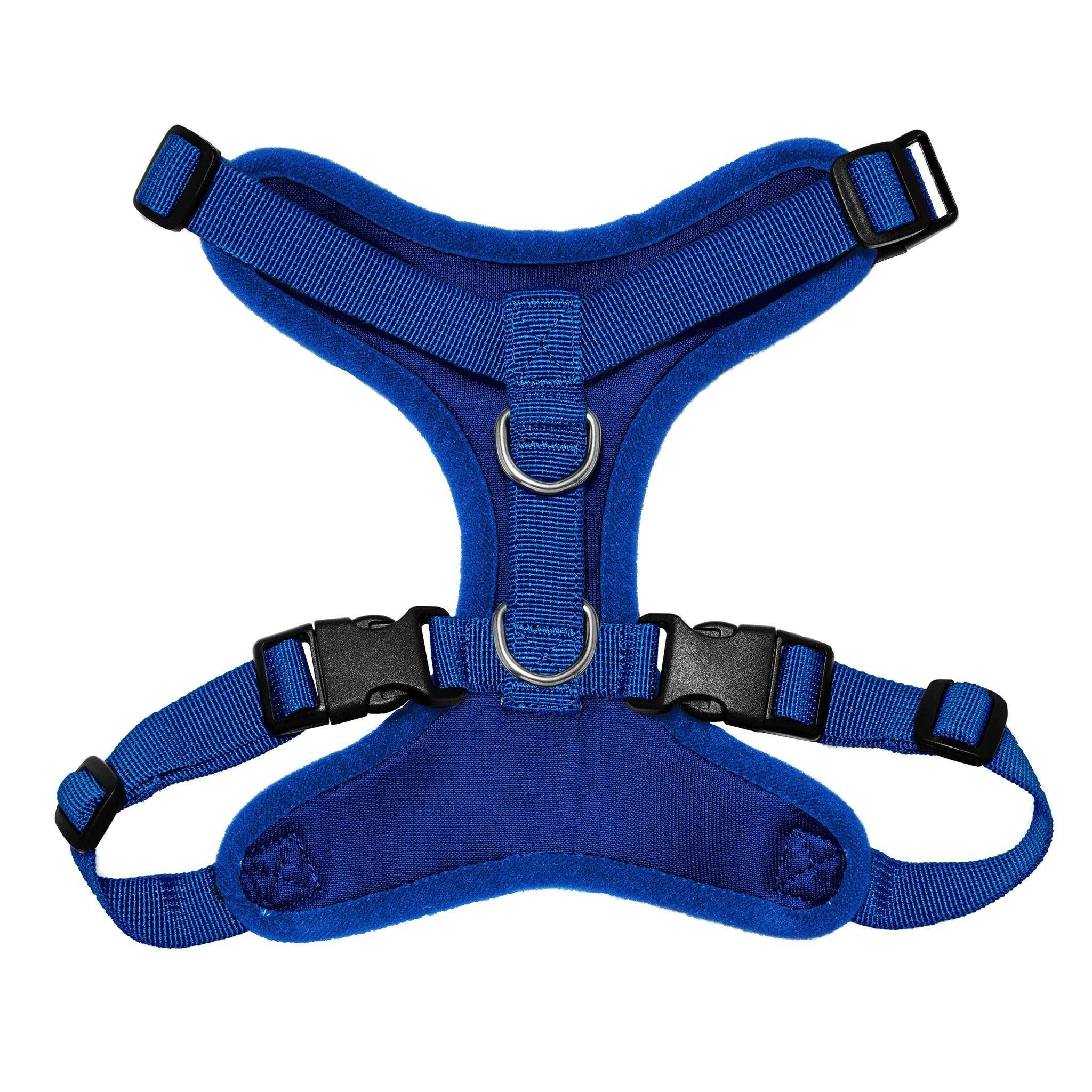
The Voyager Dual-Attachment Dog Harness is a good option for corgis that pull or need more leash control because it includes both front and back clip options. For everyday walks where pulling is not a concern, the Voyager Step-In Flex Adjustable or Step-In Air can work well when sized correctly.
Watch for early signs of back or neck discomfort, including reluctance to climb stairs, a hunched posture, stiffness, yelping when picked up, or changes in gait. If you notice these signs, speak with your vet before changing gear or increasing activity.
Pembroke vs. Cardigan Welsh Corgi Fit Considerations
Pembroke and Cardigan Welsh Corgis have similar long-body, short-leg proportions, but they are not exactly the same size.
Pembroke Welsh Corgis are usually slightly smaller and lighter. They often have a sturdy chest and compact frame, so many adult Pembrokes may fit into medium or large harness sizing depending on chest girth.
Cardigan Welsh Corgis are generally longer-bodied and heavier. They may need a larger harness size or a more adjustable fit, especially if they have a broader chest or longer torso.
For both breeds, chest girth is the most important measurement, but body length also matters. A harness that fits the chest but is too short through the body may ride up, twist, or rub near the rear edge.
Types of Voyager Harnesses for Corgis
Different corgis need different harness styles depending on their size, walking habits, coat, and sensitivity.
|
Voyager Harness
|
Best For
|
Key Feature
|
When to Choose
|
|
Step-In Flex Adjustable
|
Corgis with harder-to-fit chests
|
Adjustable chest and neck fit
|
Choose this if your corgi is between sizes or needs more fit flexibility
|
|
Step-In Air
|
Everyday walks and warm weather
|
Lightweight breathable mesh
|
Choose this for simple daily walks and easy step-in wear
|
|
Step-In Lock
|
Corgis that wiggle or try to slip out
|
More secure step-in structure
|
Choose this if your corgi has backed out of other harnesses
|
|
Dual-Attachment Dog Harness
|
Corgis that pull
|
Front and back leash clips
|
Choose this for leash redirection and training support
|
|
Step-In Plush
|
Cooler weather or sensitive skin
|
Soft plush-lined comfort
|
Choose this for a softer feel or chillier walks
|
For most corgi owners, the Step-In Flex Adjustable is a strong starting point because corgis often need more chest and neck adjustability. For corgis that pull, the Dual-Attachment Dog Harness is the better choice.
Customer Review: Step-In Air Pet Harness
For corgi owners, real fit examples can be especially helpful because chest measurements matter more than weight alone. One Voyager customer shared:
“This harness is wonderful. My dog is a 20 lb Corgi/Jack Russell mix. Her chest measures 19 inches, so we bought the large, and it fits her perfectly. It is well made, and she is comfortable wearing it.”
— Kelli, Step-In Air Pet Harness: Ultimate Comfort & Security
This review is useful because it shows why measuring matters. Even at 20 lbs, a corgi mix with a 19-inch chest needed a large size in that harness style. For corgis and corgi mixes, always measure the chest first instead of relying on weight alone.
How to Choose the Right Harness for Your Corgi
Use this quick decision guide:
-
Is your corgi a Pembroke or Cardigan?
Pembrokes may fit medium or large sizing depending on chest girth. Cardigans may need a larger or more adjustable fit.
-
Does your corgi pull?
Choose the Voyager Dual-Attachment Dog Harness for front and back leash clip options.
-
Is your corgi hard to fit?
Choose the Step-In Flex Adjustable for more chest and neck flexibility.
-
Has your corgi slipped out of a harness before?
Choose the Step-In Lock for a more secure step-in structure.
-
Do you walk mostly in warm weather?
Choose the Step-In Air for lightweight breathability.
-
Does your corgi need a softer harness?
Choose the Step-In Plush for a cozier feel.
Measuring and Fitting Guide for Corgi Harnesses
To choose the right corgi harness, start with chest girth.
-
Measure chest girth
Wrap a soft measuring tape around the widest part of your corgi’s rib cage, just behind the front legs.
-
Measure body length
Measure from the withers, or the high point between the shoulder blades, to the base of the tail. This helps you check whether the harness will sit comfortably on a long body.
-
Check armpit clearance
After putting the harness on, make sure the chest strap sits at least two finger-widths behind the front legs.
-
Use the two-finger fit rule
You should be able to slide two stacked fingers between each strap and your dog’s body.
-
Check for rotation
Ask your corgi to walk and turn. If the harness rotates to one side, shifts forward, or rubs behind the legs, adjust the straps or try a different size.
Care and Maintenance Tips
Corgis are heavy-shedding dogs, so their harnesses can collect undercoat, dirt, and outdoor debris.
-
After walks: Wipe the harness with a damp cloth, especially around the chest and underarm contact points.
-
Weekly: Brush the webbing or mesh gently to remove trapped fur.
-
Deep clean as needed: Hand wash with mild detergent or use a delicate cycle in a mesh laundry bag if the care label allows it.
-
Dry fully: Always air dry before the next use. Avoid machine drying because heat can damage buckles, stitching, elastic, and reflective details.
Check buckles, stitching, and leash attachment points regularly, especially if your corgi pulls suddenly toward squirrels, bikes, or other moving distractions.
What Makes Voyager’s Corgi Harness Collection Stand Out
Voyager offers a range of step-in harnesses that can work for corgis across different sizes, body shapes, and walking habits. Instead of relying on one single harness style, corgi owners can choose based on their dog’s specific needs.
The Step-In Flex Adjustable supports hard-to-fit chests. The Step-In Air gives corgis a lightweight everyday option. The Step-In Lock adds security for dogs that back out of harnesses. The Dual-Attachment Dog Harness offers front and back leash clips for dogs that pull. The Step-In Plush adds a softer, cozier feel for cooler weather or more sensitive skin.
This range helps corgi owners choose the right harness for their dog’s body and routine rather than forcing every corgi into one standard fit.
FAQs
What kind of harness is best for a corgi?
The best harness for a corgi is one that fits securely around the chest, clears the armpits, allows natural front-leg movement, and does not put pressure on the neck. In the Voyager range, the Step-In Flex Adjustable is a strong everyday option, while the Dual-Attachment Dog Harness is better for corgis that pull.
Should corgis wear a harness?
Yes, a harness is usually better than a collar for leash walks because it spreads pressure across the chest and shoulders instead of focusing it around the neck. A collar can still be used for ID tags.
Can a harness help protect a corgi’s back during walks?
A harness can help reduce daily walking pressure on the neck and spine by distributing leash force across the chest and shoulders. It cannot prevent IVDD, but it can be part of a more spine-conscious walking routine.
What harness do vets recommend for corgis?
Veterinary sources generally recommend harness features rather than one specific brand: a secure fit, chest pressure distribution, and front-clip options for dogs that pull. The Voyager Dual-Attachment Dog Harness is the front-clip option in the Voyager lineup.
How does a no-pull harness help with corgi behavior?
A no-pull or dual-attachment harness helps redirect a corgi’s forward momentum when they pull. This can be helpful for corgis that chase squirrels, bikes, joggers, or other moving distractions.
How do I know if my corgi harness fits correctly?
Use three checks: two stacked fingers should fit between each strap and your dog’s body, the chest strap should sit at least two finger-widths behind the front legs, and the harness should stay centered when your corgi turns or walks.
What size harness does a corgi need?
Corgi sizing depends on chest girth, not weight alone. Measure the widest part of the rib cage, then compare that number with the size chart for the specific Voyager harness style.
Is it safe to lift or assist my corgi using a harness handle?
A handle can help with brief guidance, like steadying your dog near a curb, but it should not be used to fully lift a corgi without supporting the chest and rear separately. This is especially important for long-backed breeds.
Are collars bad for corgis?
Collars are not bad for ID tags, but they are not ideal as the main leash attachment for walks. A harness is usually the better option because it avoids direct leash pressure on the neck.
Which Voyager harness is best for a corgi that pulls?
The Voyager Dual-Attachment Dog Harness is the best Voyager option for a corgi that pulls because it includes both front and back leash clip options for training and everyday control.