The Complete Guide to Step-In Dog Harnesses
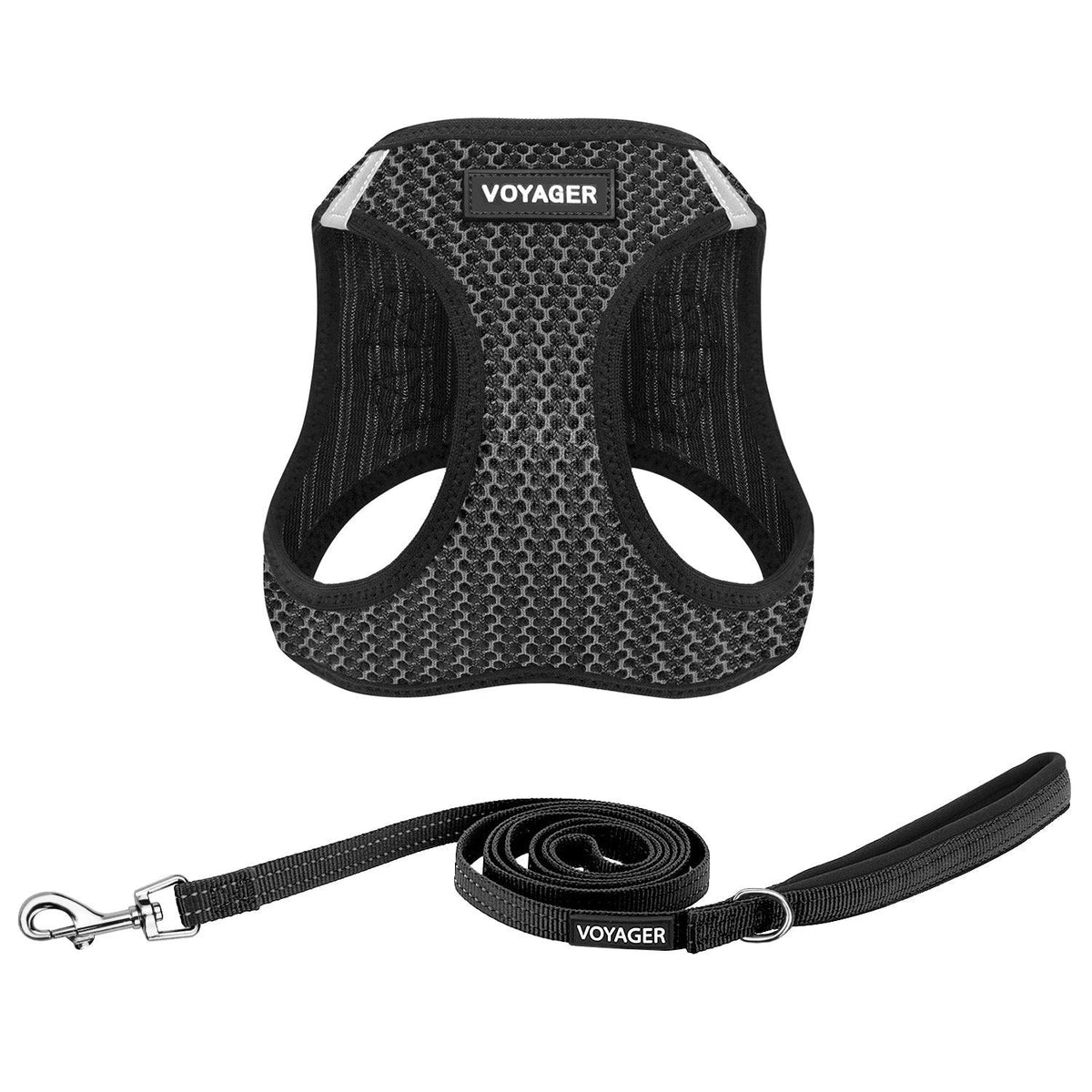
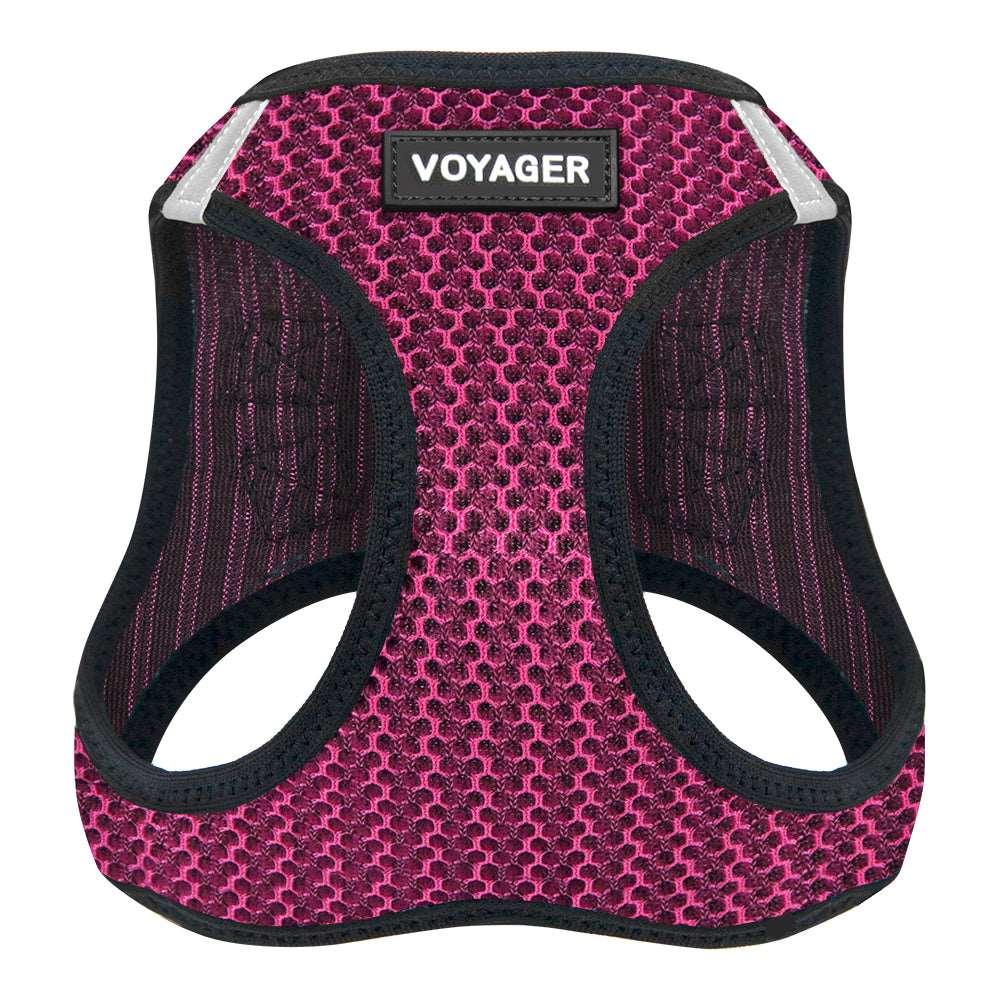
A step-in dog harness is walking gear designed to secure around a dog's chest and shoulders without passing over their head or ears. The dog simply steps their front paws into two leg loops, allowing the harness to be pulled up and fastened securely across the back.
At Voyager, our step-in dog harness collection fits chest girths ranging from 10 inches (XXXS) to 28 inches (XL). Engineered across four distinct builds—Air, Flex, Lock, and Plush—our step-in designs provide chest-based support, eliminating the discomfort of traditional overhead gear for dogs of all sizes.
Why a Step-In Dog Harness Is Easier for Dogs
If your dog ducks their head, cowers, or backs away when they see their walking gear, they are likely experiencing handling sensitivity triggered by overhead gear. According to handling-sensitivity guidelines from the American Kennel Club (AKC), forcing equipment over a dog's sensitive eyes, ears, and snout can trigger a mild stress response, starting the walk on an anxious note.
A step-in harness moves physical contact strictly to the paws and torso—areas where most dogs are far less sensitive. This reduced-resistance entry creates a calm, stress-free transition from the living room to the sidewalk. It is particularly beneficial for:
-
Head-shy rescue dogs unaccustomed to close facial handling.
-
Breeds with large heads or upright ears (such as Bulldogs or French Bulldogs) that catch on narrow harness collars.
-
Puppies undergoing early leash-acclimation training.
Key Features of Voyager Step-In Harnesses
Rather than relying on generic designs, every Voyager step-in harness is built around specialized hardware engineered for security, comfort, and longevity:
-
Triple-Security Closure (Step-In Air): Features a high-strength hook-and-loop fastener, a heavy-duty side-release buckle, and dual metal D-rings to ensure the harness stays centered even during sudden lunges.
-
Custom-Fit Adjustment Sliders (Step-In Flex): Includes three independent adjustment sliders to contour to unusual chest-to-neck ratios, paired with 3M Scotchlite reflective straps for night visibility.
-
Locking Slider Mechanism (Step-In Lock): Built with an integrated lock mechanism on the neck and chest straps, offering custom security for wriggly, escape-prone dogs.
-
All-Weather Air Mesh: Constructed from lightweight, moisture-wicking air mesh with soft, padded edges to prevent armpit chafing and overheating during summer walks.
Safety and Control Benefits: Protecting the Neck and Airway
Beyond ease of use, a step-in harness offers critical anatomical protection that standard neck collars cannot match. According to the American Animal Hospital Association (AAHA), pulling forces applied directly to a neck collar transmit severe pressure to the trachea and cervical spine.
By sitting lower across the torso, a step-in harness distributes all leash tension across the strong sternum and ribcage. This eliminates neck strain, protecting fragile windpipes—an essential safety feature for toy breeds, brachycephalic dogs, and pets with diagnosed respiratory sensitivities.
Security Note: While the dual D-ring enclosure prevents sudden twists, backing out can still occur if a harness is worn too loose. For dogs prone to wriggling backward, ensure you follow our two-finger fit validation below or select our specialized Step-In Lock model.
Step-In vs. Over-the-Head Harness: Which Is Right for Your Dog?
Choosing between a step-in and an over-the-head harness comes down to your dog's handling comfort, chest shape, and pulling behavior:
|
Feature / Scenario
|
Step-In Harness
|
Over-the-Head Harness
|
|
Paws-Only Entry
|
Ideal: No gear touches the face or ears.
|
Not Ideal: Must slip over the snout and head.
|
|
Head & Ear Sensitivity
|
Best: Eliminates anxiety for head-shy dogs.
|
Can trigger avoidance in sensitive breeds.
|
|
Pulling Control
|
Moderate: Best for gentle to average walkers.
|
High: Often includes front-clip no-pull options.
|
|
Ease of Use
|
Fastest: Paws in, pull up, clip across back.
|
Requires lifting legs and threading buckles.
|
Choose a step-in harness if your dog hates overhead gear, has large ears/head, or is a calm-to-moderate walker.
Choose an over-the-head harness if your dog is a heavy, powerful puller requiring a front-chest leash attachment point (such as the Voyager Dual-Attachment Harness).
Explore Our Four Step-In Harness Builds
Voyager offers four specialized step-in styles tailored to different climates, body shapes, and walking needs:
-
Step-In Air (Everyday Breathable Mesh): Our classic lightweight air-mesh vest featuring a triple-security closure (hook-and-loop, buckle, and double D-rings) and dual reflective bands.
-
Step-In Flex (Fully Adjustable Fit): Features breathable mesh paired with three adjustment sliders across the torso and 3M Scotchlite reflective piping.
-
Step-In Lock (Maximum Escape Security): Built with specialized locking sliders across the neck and chest straps to contour tightly to a wriggly frame.
-
Step-In Plush (Cold-Weather Warmth): Crafted from plush materials including corduroy, suede, quilted fabric, and faux leather with soft padded linings.
Getting the Fit Right: Measurement and Sizing Charts
A step-in harness only protects your dog if it fits correctly. Always measure your dog's chest girth at the widest point (just behind the front legs) while they are standing.
Step-In Air & Step-In Plush Size Chart
|
Size
|
Neck Girth
|
Chest Girth
|
Max Weight*
|
|
XXXS
|
7" – 8"
|
11" – 12"
|
up to 6 lbs
|
|
XXS
|
8.5" – 9.5"
|
12" – 13.5"
|
up to 8 lbs
|
|
XS
|
10" – 11"
|
13" – 14.5"
|
up to 9 lbs
|
|
S
|
11" – 12"
|
14.5" – 16"
|
up to 14 lbs
|
|
M
|
12" – 13.5"
|
16" – 18"
|
up to 18 lbs
|
|
L
|
13.5" – 15.5"
|
18" – 20.5"
|
up to 23 lbs
|
|
XL
|
15.5" – 18"
|
20.5" – 23"
|
up to 28 lbs
|
Step-In Flex Harness & Leash Combo Size Chart
|
Size
|
Harness Neck
|
Harness Chest
|
Leash Length
|
Leash Width
|
|
XS
|
9" – 11"
|
13" – 16"
|
5 FT
|
5/8"
|
|
S
|
11" – 13"
|
15" – 18"
|
5 FT
|
5/8"
|
|
M
|
13" – 15"
|
17" – 21"
|
5 FT
|
3/4"
|
|
L
|
15" – 17"
|
20" – 25"
|
5 FT
|
3/4"
|
|
XL
|
16" – 19"
|
23" – 28"
|
5 FT
|
3/4"
|
Step-In Lock Size Chart (Dual Adjustable Straps)
|
Size
|
Neck Girth
|
Chest Girth
|
Back Length
|
Max Weight*
|
|
XXXS
|
7" – 9"
|
10.5" – 13"
|
3.3"
|
4 – 7 lbs
|
|
XXS
|
8" – 10"
|
11.5" – 14"
|
3.5"
|
7 – 9 lbs
|
|
XS
|
9" – 11"
|
13" – 16"
|
3.8"
|
9 – 13 lbs
|
|
S
|
11" – 13"
|
15" – 18"
|
4"
|
13 – 17 lbs
|
|
M
|
13" – 15"
|
17" – 21"
|
4.5"
|
17 – 25 lbs
|
|
L
|
15" – 17"
|
20" – 25"
|
5"
|
25 – 33 lbs
|
|
XL
|
16" – 19"
|
23" – 28"
|
5.5"
|
33 – 40 lbs
|
*Please note that weights are for reference only and may not directly correspond with the correct size. Do not exceed max weight!
The Escape-Prevention Checklist
-
The Two-Finger Rule: Once buckled, you should be able to slide exactly two stacked fingers between the harness and your dog's body. If you can slide three or more fingers, the harness is too loose and risks escaping.
-
Leg Clearance: Verify that the leg loops leave adequate space behind the armpits to prevent rubbing or chafing during movement.
-
Sizing Between Bands: If your dog falls between sizes on a non-adjustable model, size up to the Step-In Flex or Step-In Lock so you can use the adjustment sliders to achieve a custom fit.
How to Clean and Care for Your Step-In Harness
Proper care extends the life of your gear and maintains hardware integrity:
-
Step-In Air & Step-In Flex: Hand wash in warm water with mild detergent. Rinse thoroughly and allow to air dry completely.
-
Step-In Lock: Wash by hand, ensuring warm water flushes through the lock mechanism to remove dried sand, mud, or debris that could jam the locking slider.
-
Step-In Plush (Suede / Corduroy): Spot clean with a damp cloth and mild soap to preserve fabric texture. Avoid full water submersion for suede variants.
-
Weekly Safety Inspection: Inspect buckles, D-rings, and stitching weekly for signs of wear, fraying, or stress cracks. Replace worn gear immediately to maintain walking safety.
Frequently Asked Questions
What is a step-in dog harness?
A step-in dog harness is walking gear designed without overhead loops. Your dog steps their front legs into two openings on the ground, and the harness pulls up to buckle securely over their back.
Are step-in harnesses better for dogs that pull?
A step-in harness safely redirects tension across the chest to relieve throat strain for light-to-moderate pullers. However, for severe or powerful pullers, a dedicated front-clip harness (like the Voyager Dual-Attachment) provides greater leverage and directional control.
Are step-in dog harnesses escape-proof?
No harness is 100% escape-proof if sized incorrectly. However, when fitted properly using the two-finger rule, a step-in harness is extremely secure. For dogs prone to wriggling backward, our Step-In Lock harness features custom locking sliders that minimize back-out risks.
Is a step-in harness better than an over-the-head harness?
It depends on your dog's temperament. Step-in harnesses are superior for head-shy dogs, puppies, and breeds with large heads or ears. Over-the-head harnesses are often preferred for heavy pullers requiring a front-leash attachment point.
How do I stop my dog's harness from chafing their armpits?
Chafing happens when a harness is either too loose (causing friction) or cut too close to the front legs. Measure chest girth accurately, select lightweight air mesh with padded piping, and use the two-finger rule to ensure a snug, friction-free fit.